The Blind Spot of Journalism
Research through design
Project Overview
The overall goal of the project has been to clarify and nuance the abstract meaning of trust, how it relates to journalism, and more importantly, what it means for designing the news to be trusted.
The project has gone through two main phases. Finding out the roots cause via explorative interviews, creating a hypothesis and validating it through evaluative tests driven by prototypes.
The main finding was that distrust plays an even bigger role than trust, and that design seems to have the power to blur one’s perception of news.
Problem statement
How does the design of news services influence the trust in news and journalisme?
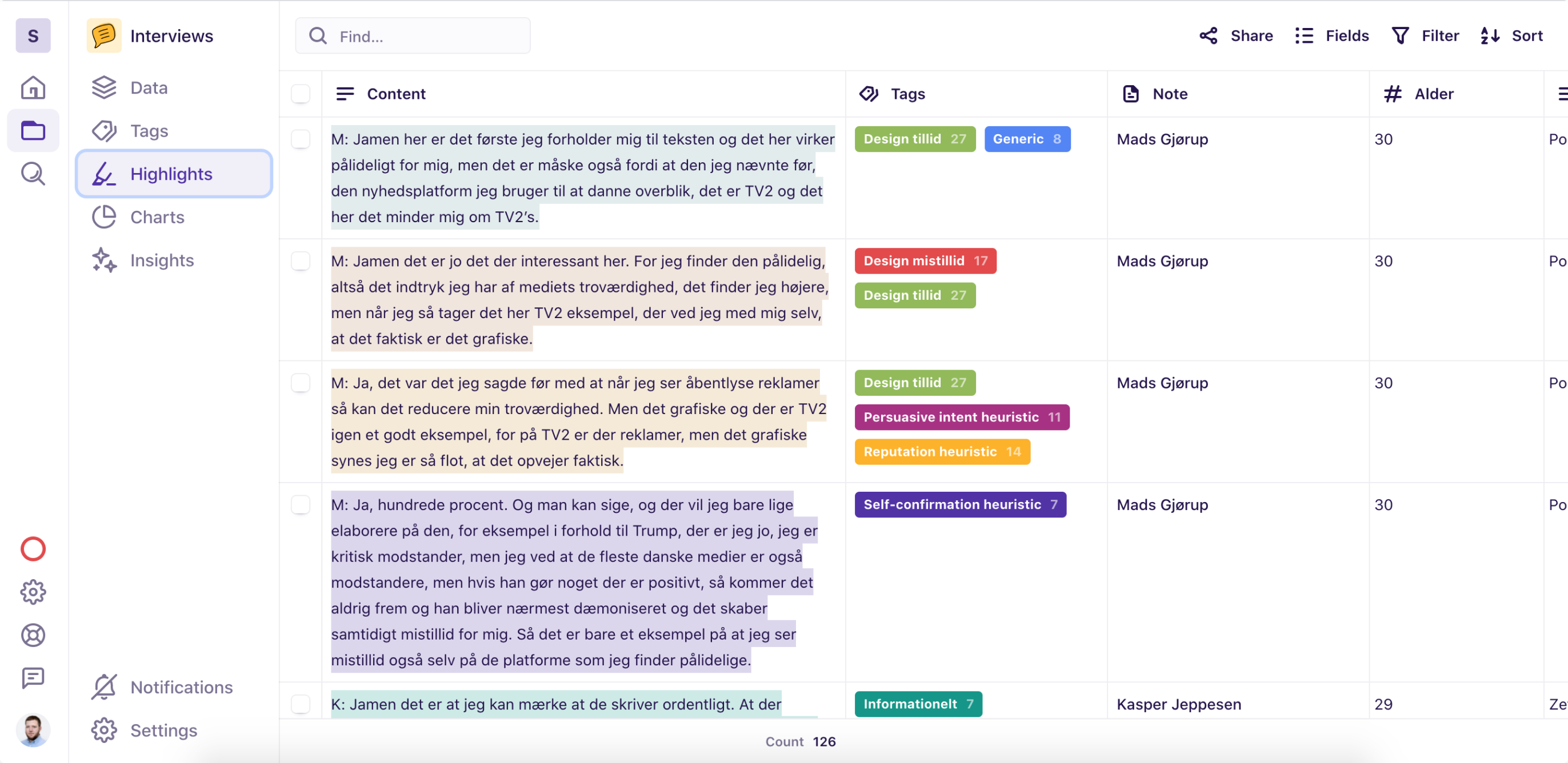
The research and coding of the interviews was done primarily in Dovetail to keep it structured.
The project started by getting an understanding of the emerging trust crisis the world is undergoing. This is well documented by Reuters Institutes in their yearly reports that reveals a downward spiral in general trust and the willingness to pay for news. Furthermore, the need for transparency in journalism and the ability to help the user to actually understand the news.
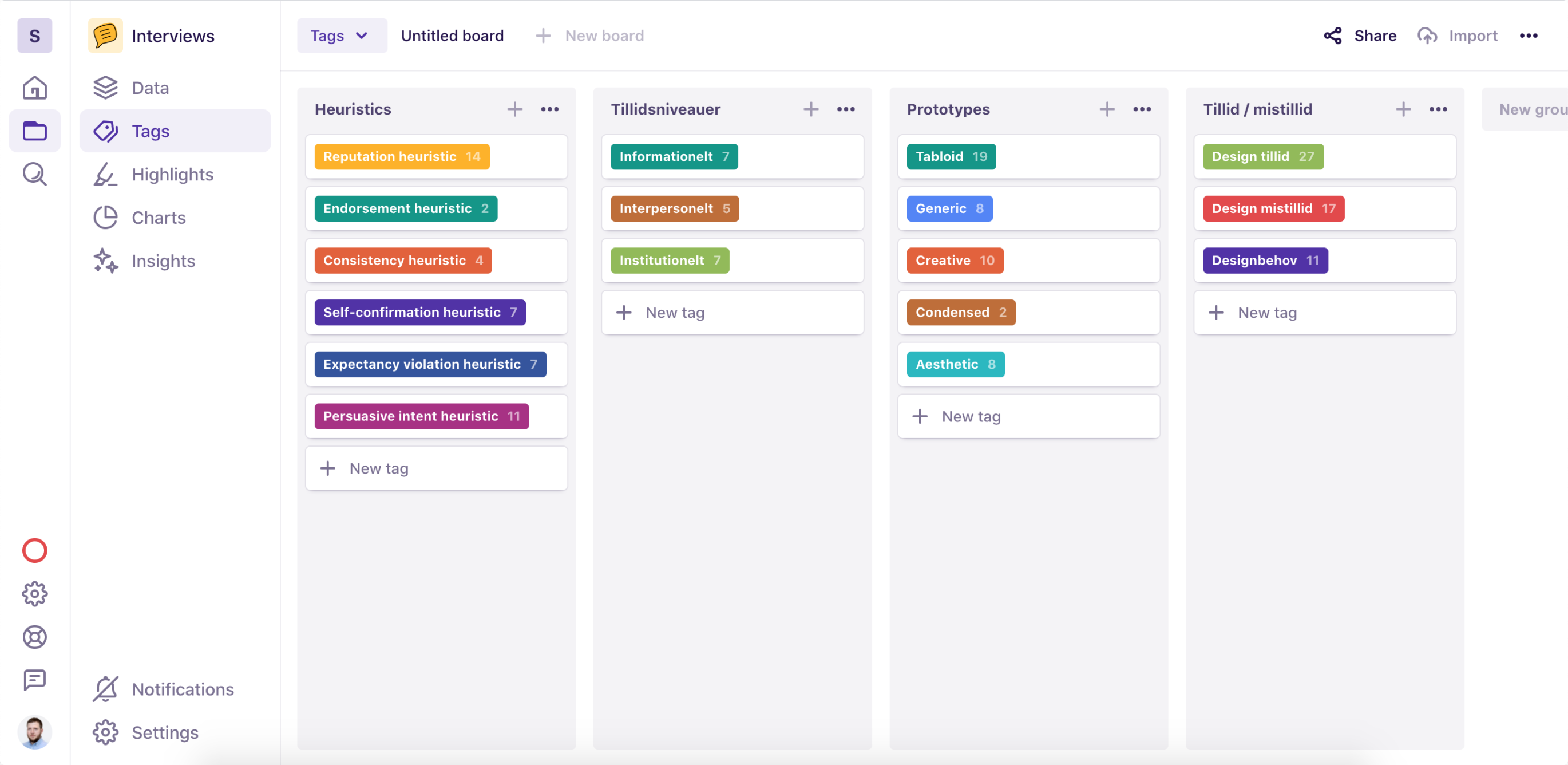
Different ways of looking at trust emerged and can combined be summarised to being a very socially contingent. Most relevant in this study was the “Persuasive intent” heuristic which means a negative understanding of information that appears biased, and the “Reputation” heuristic meaning trust towards something one is familiar with and knows.
The research and coding of the interviews was done primarily in Dovetail to keep it structured.
The interviews was conducted as semistructured interviews with 5 people within generation Y who had held or holds a subscription to a news paper.
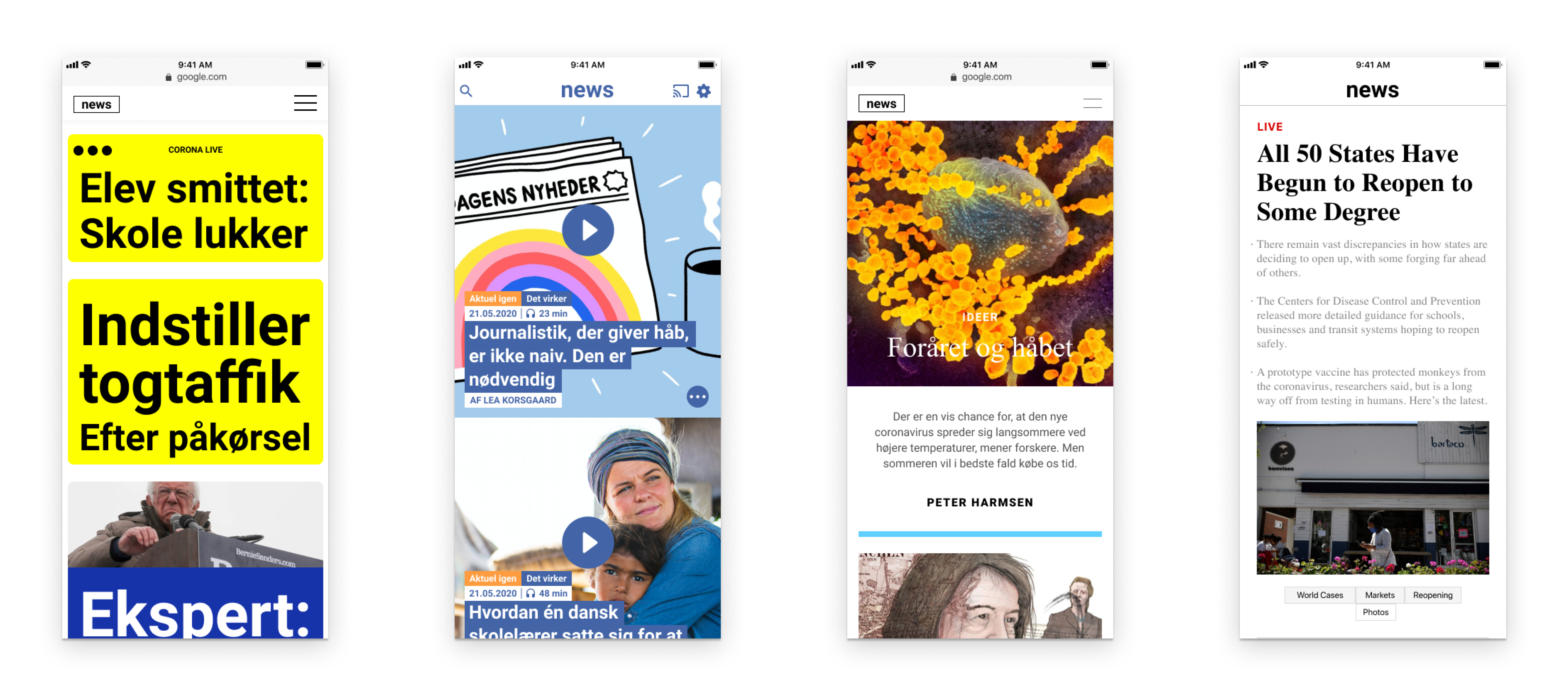
The most interesting findings across the interviews was that if the design of news was “good enough” it was not to effect the trust among the respondents, meaning that there is a limit to how trustworthy a design can be perceived. This was true with the more generic types of design. On the contrary the respondents were indignant and much more aware when something they did not trust were presented to them relying on familiarity with the design they find untrustworthy. This was associated with the composition of large typography and the yellow breaking colours.
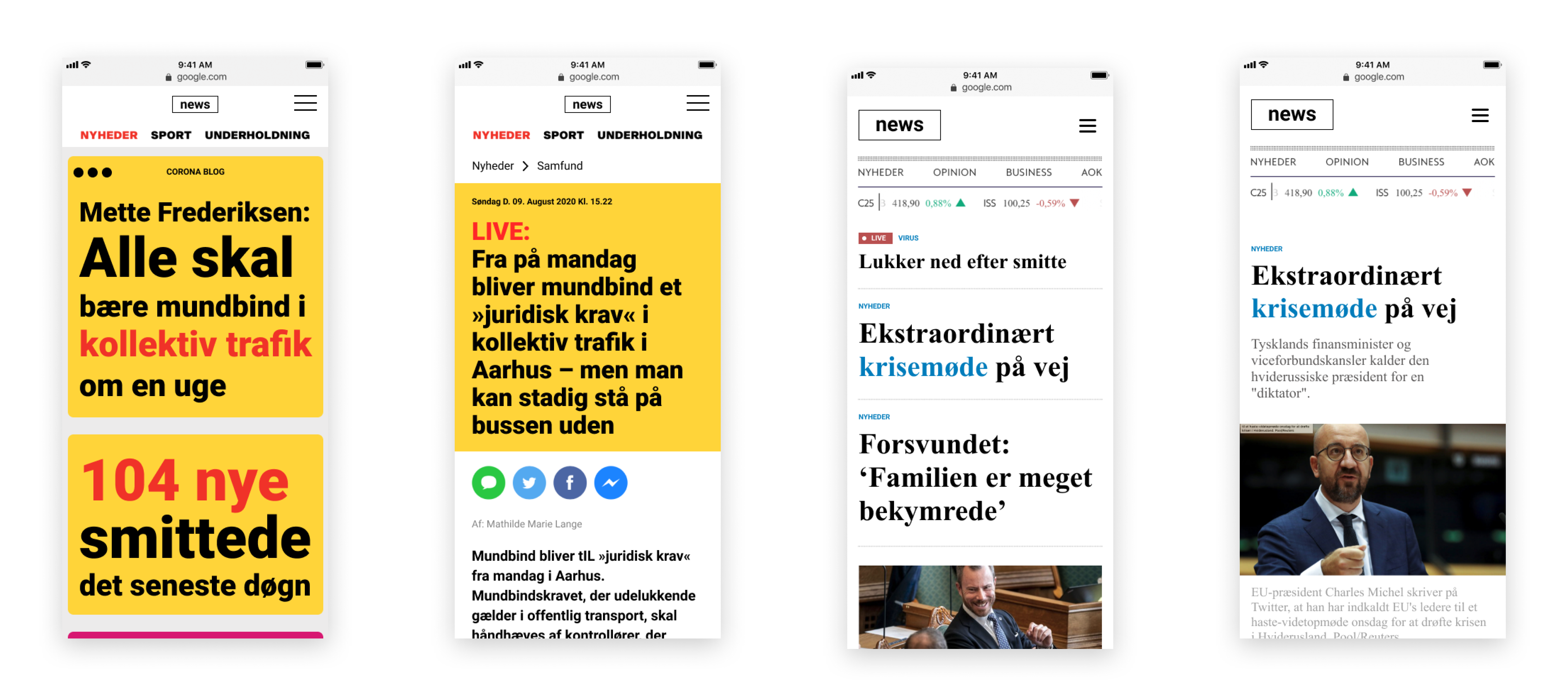
The graphics to left are tabloid designs with the generic newspapers content, on the left it is the other way around.
Phase two
Evaluative interviews
This second test was built around how we read online. Browsing vs. deep reading. Based on the browsing context I wanted to find out how 5 seconds of looking at an article would be perceived as well as looking for an unlimited period of time. Results being a marginal difference between the methods between the test, test still confirming the initial hypothesis.
The insights from the thesis gave me motivation for taking the project to the next phase after hand-in. What seemed to be a blind road being unable to optimise design to be trusted, later on led me to think of ways design could “solve” this issue.
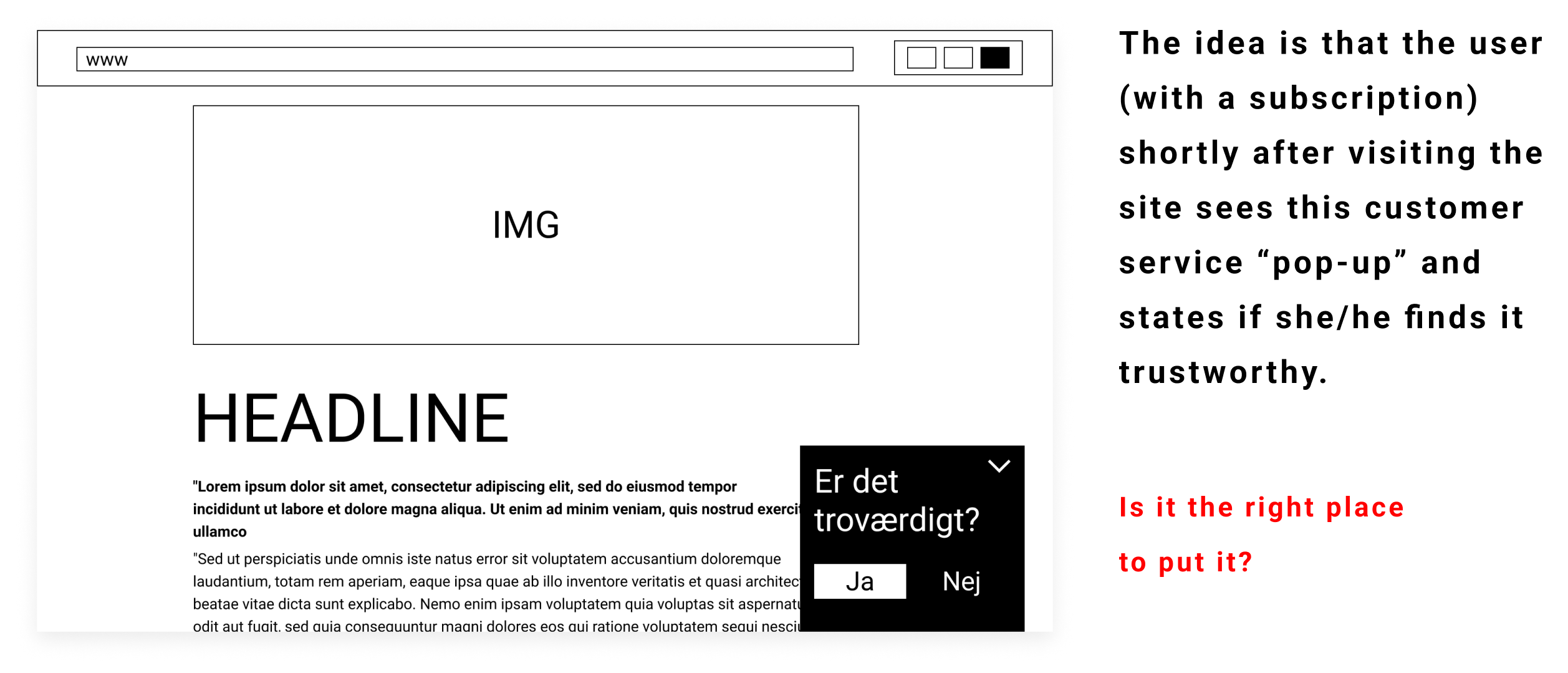
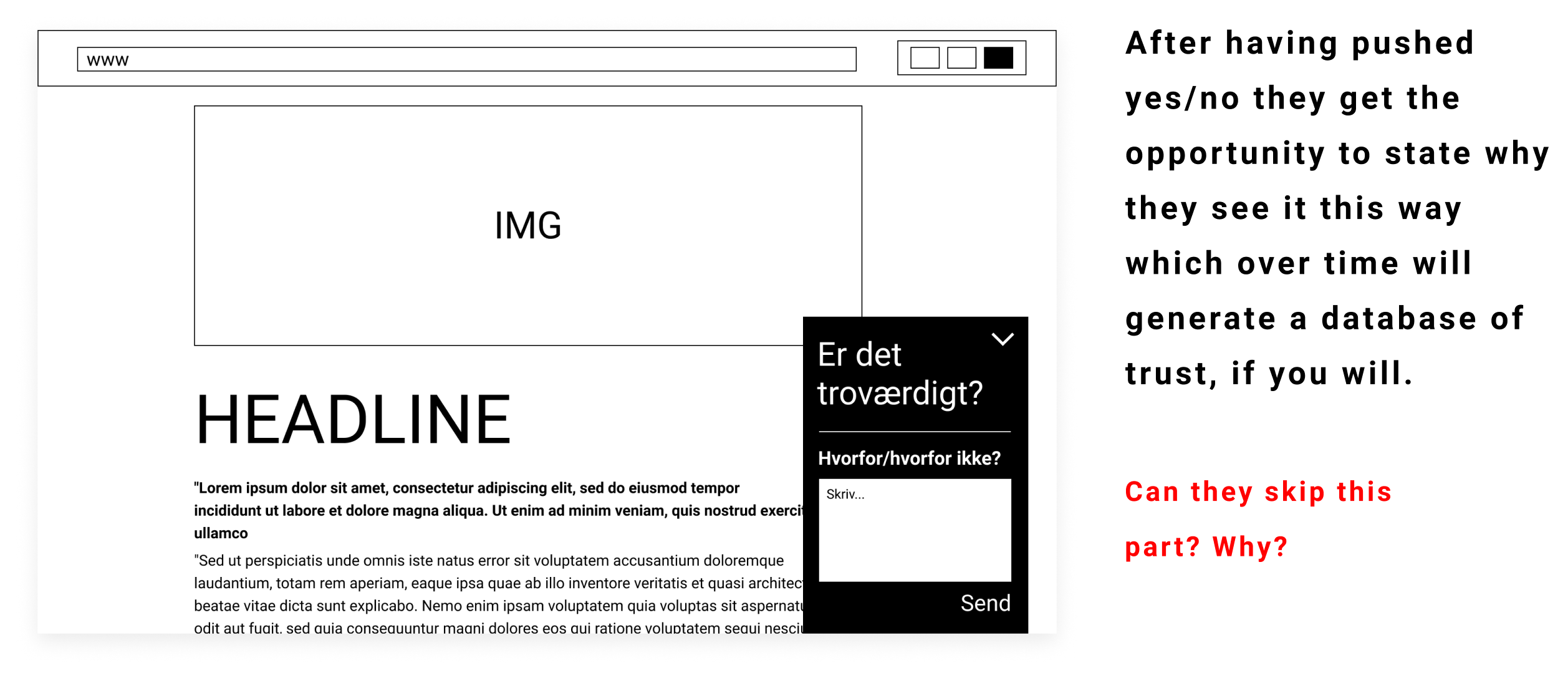
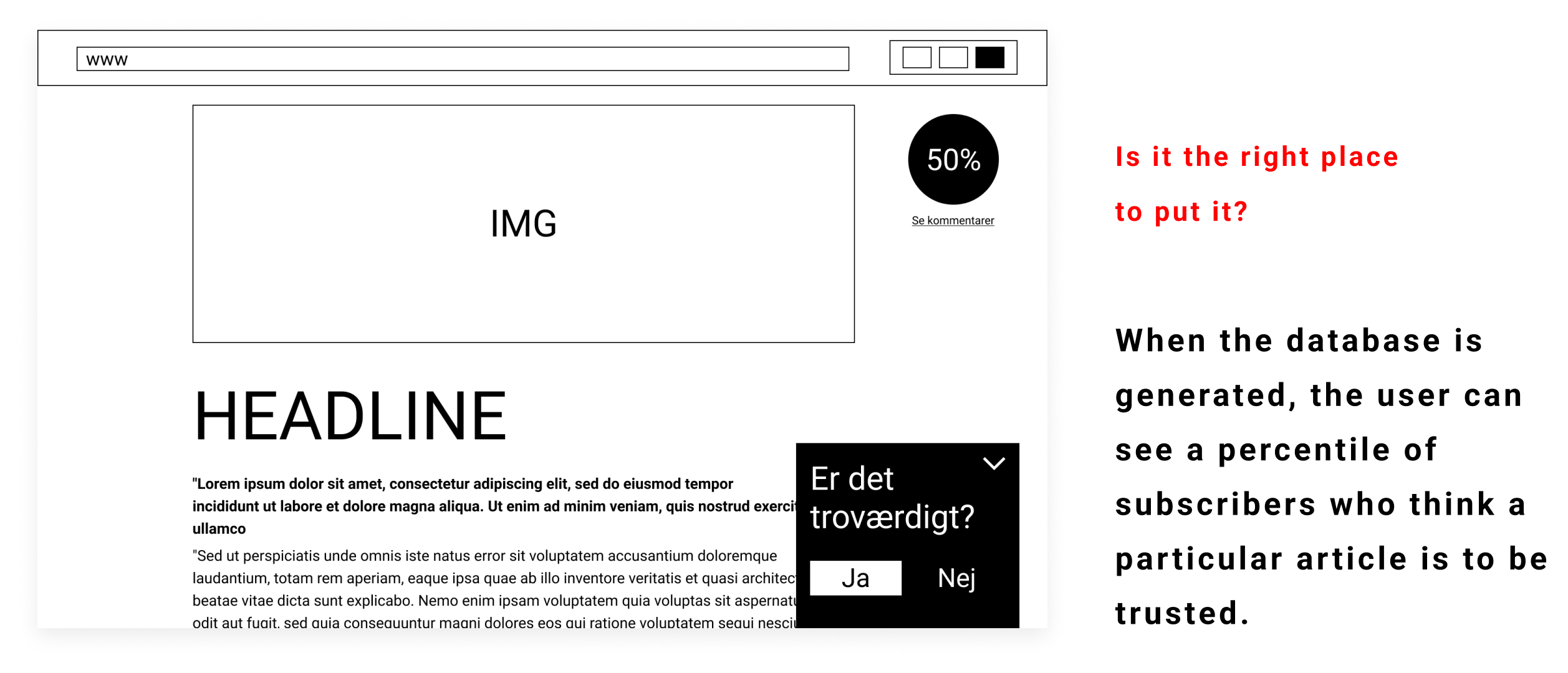
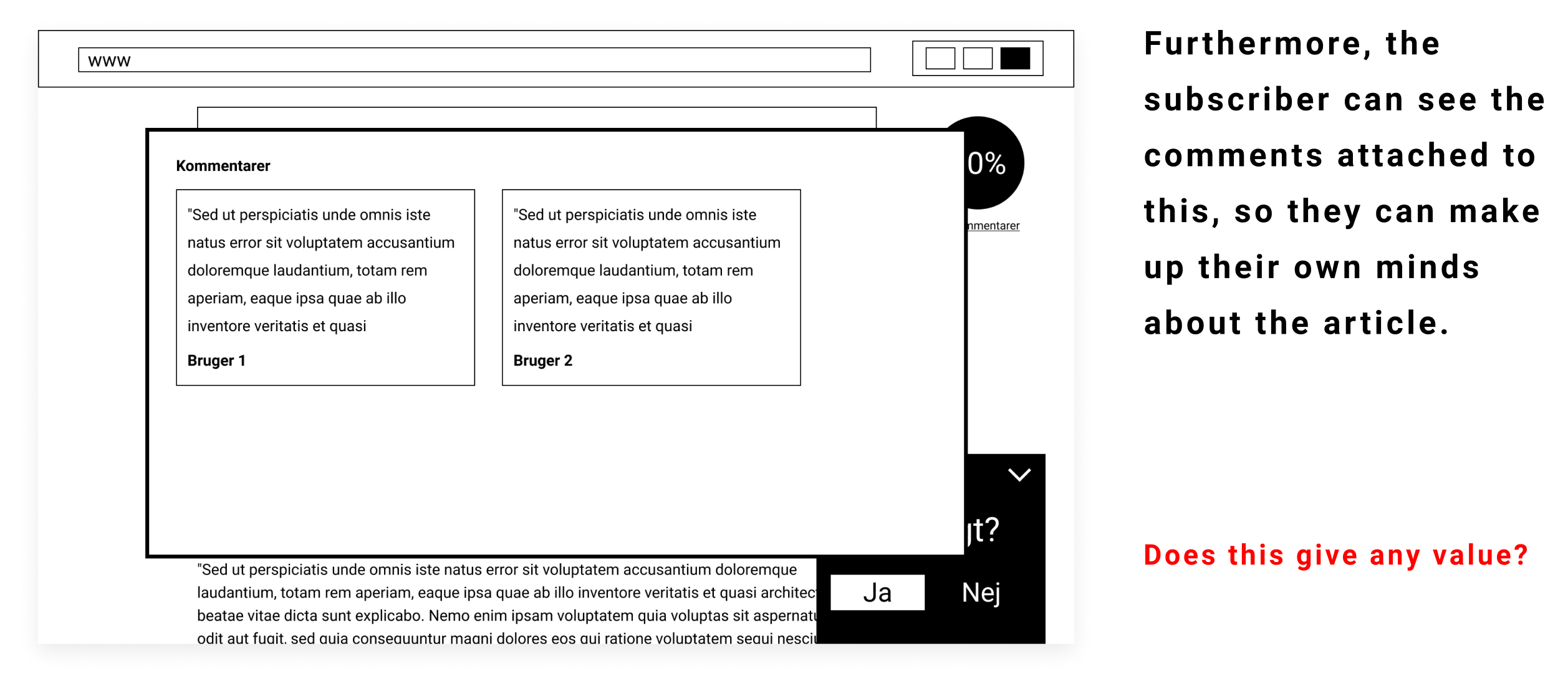
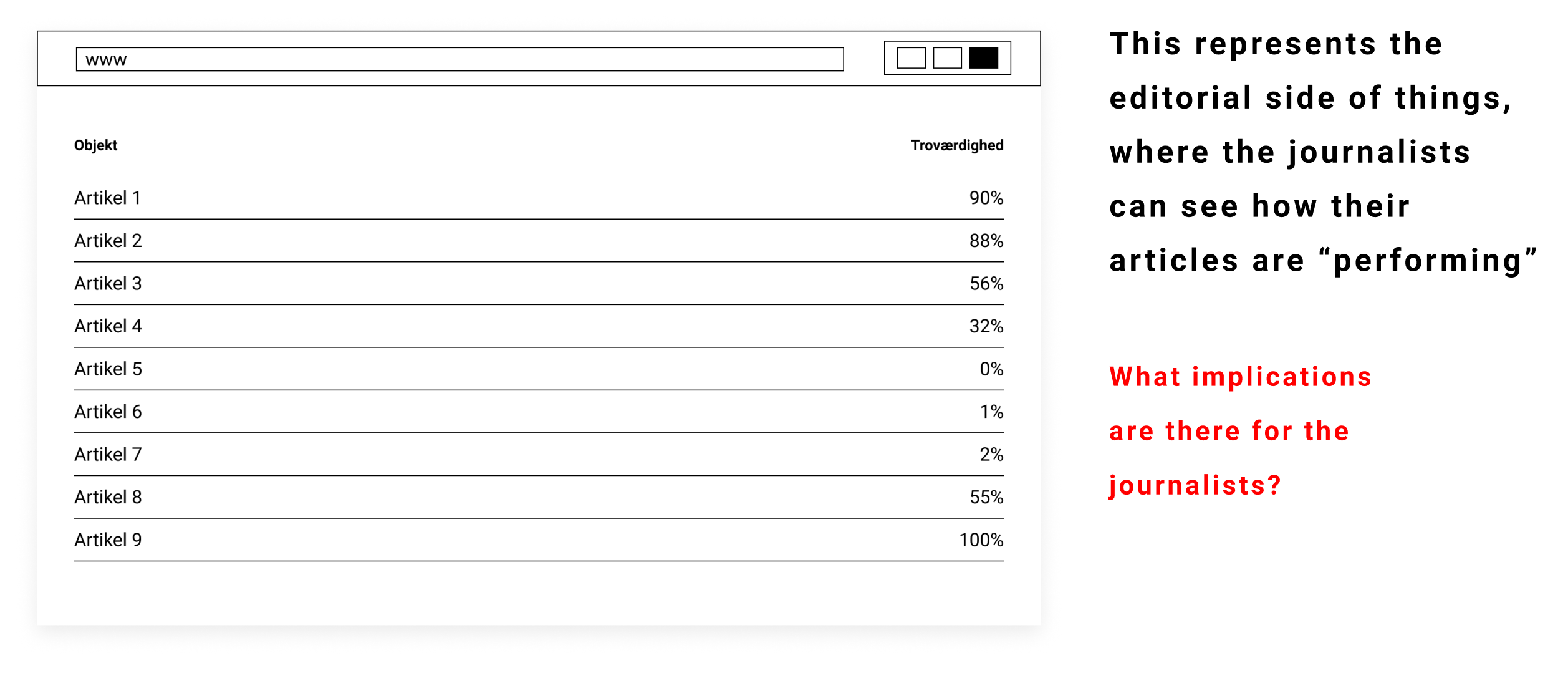
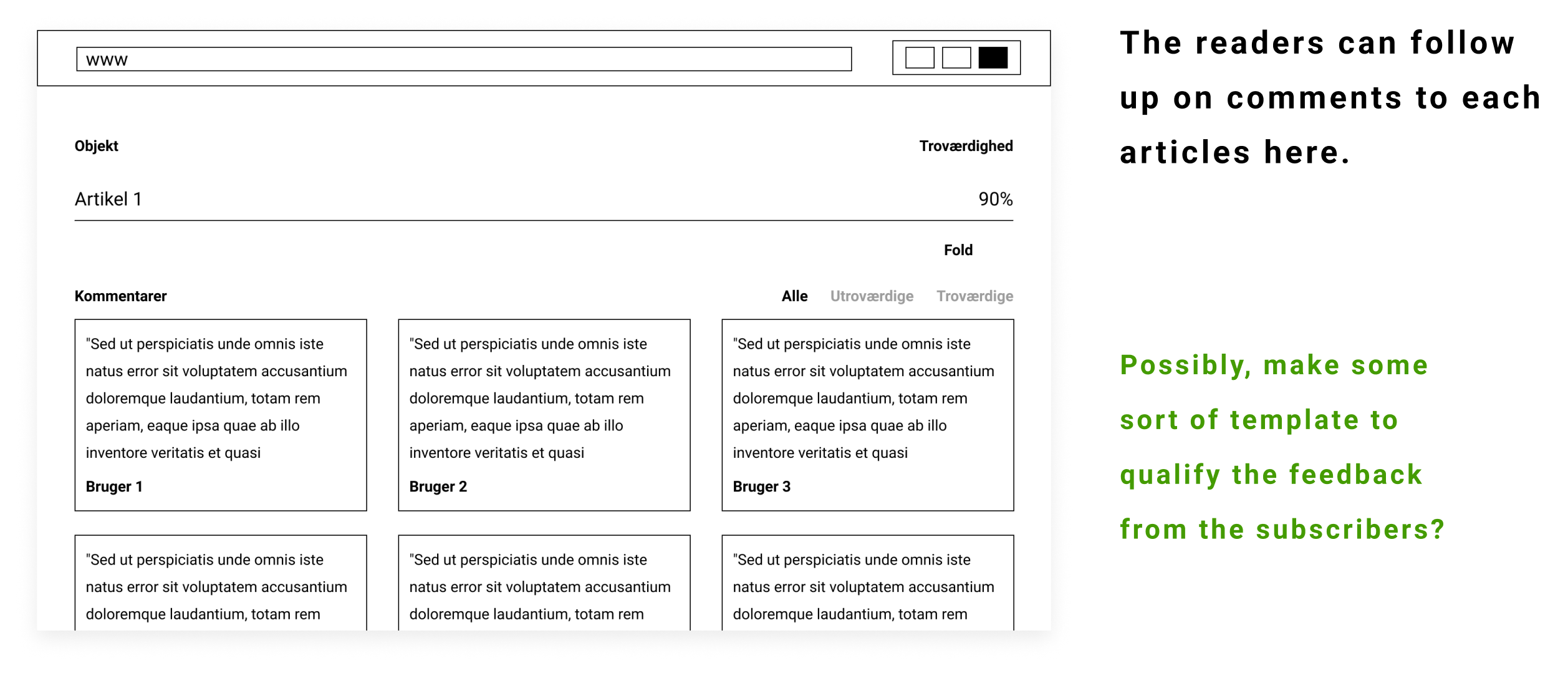
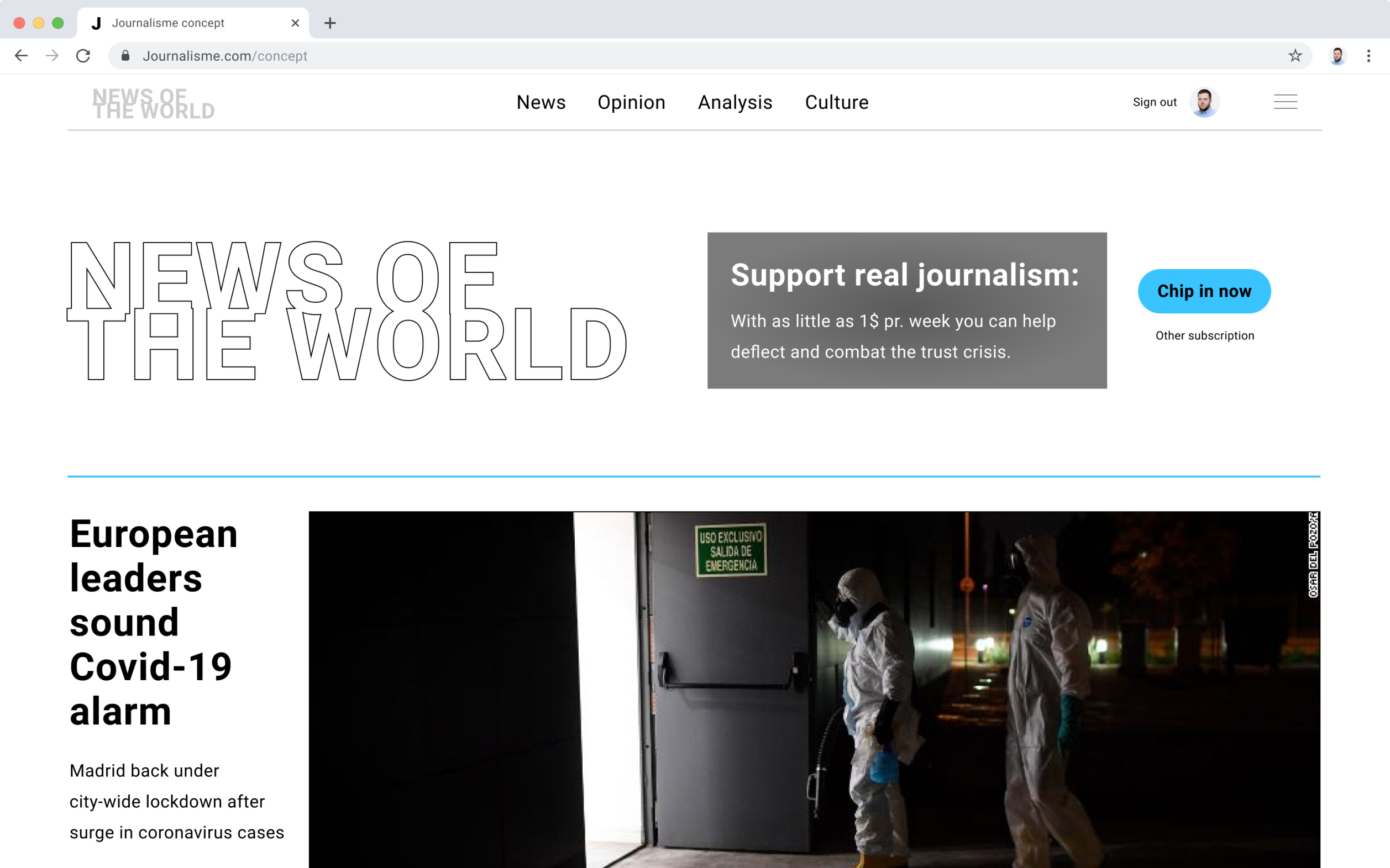
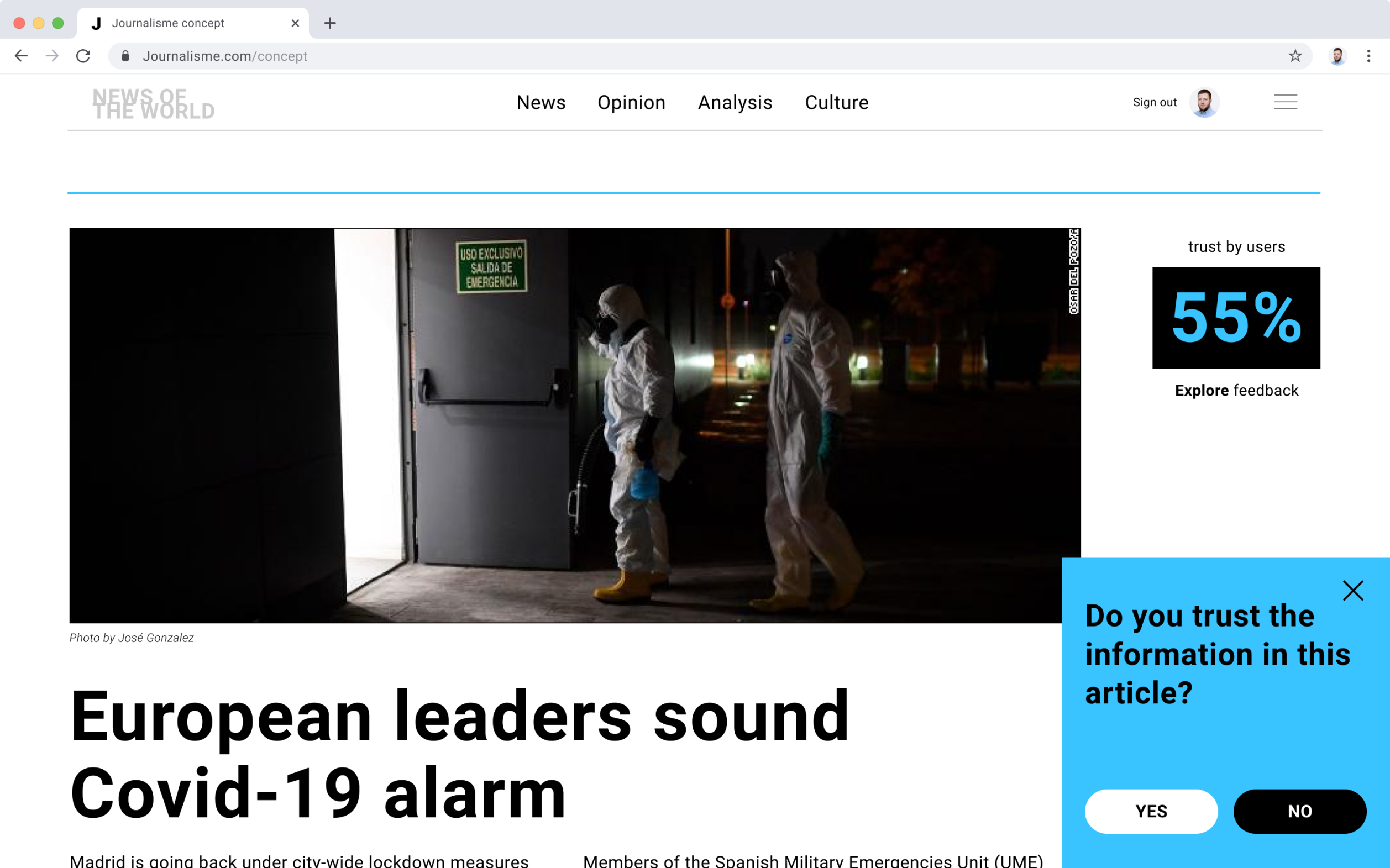
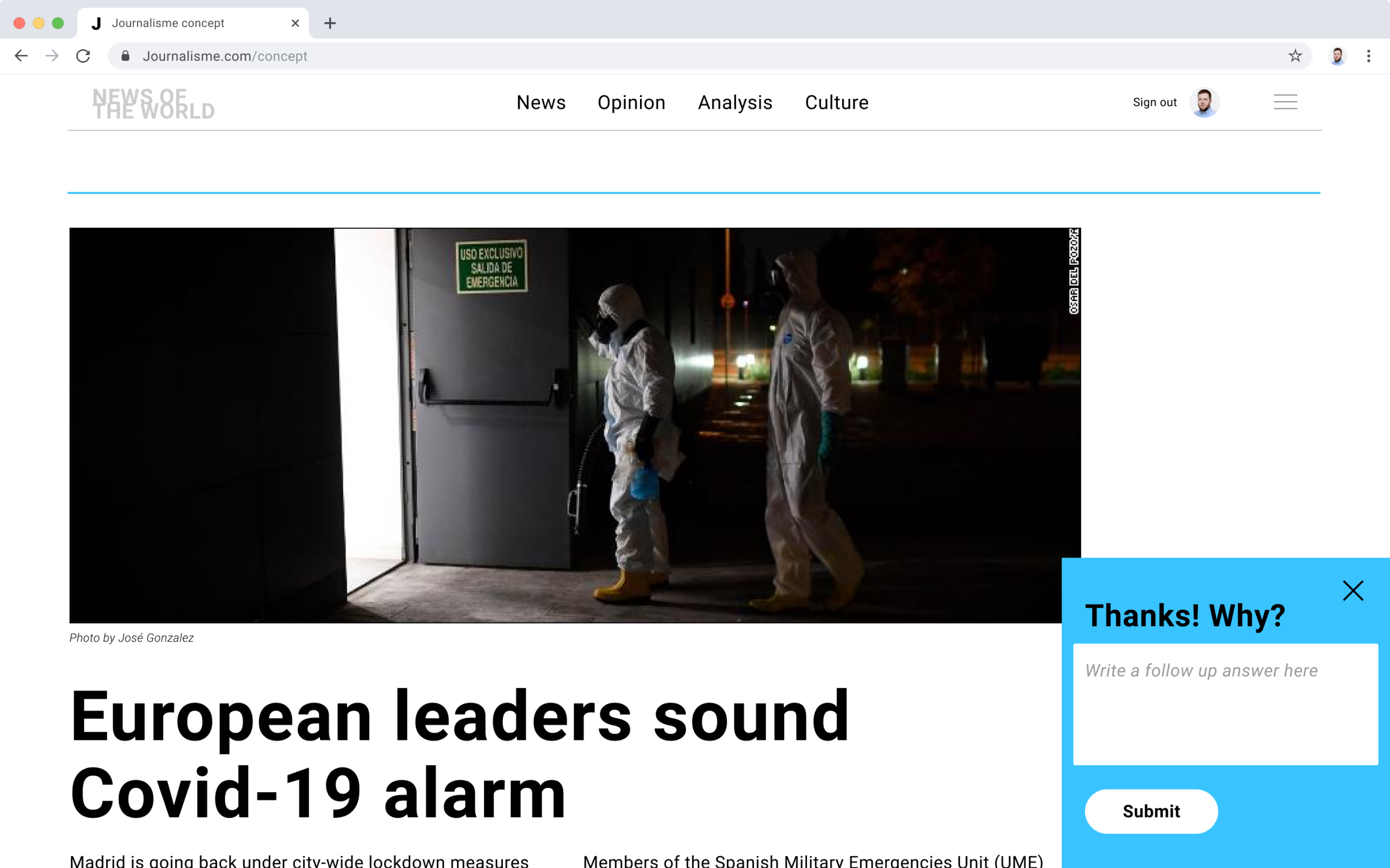
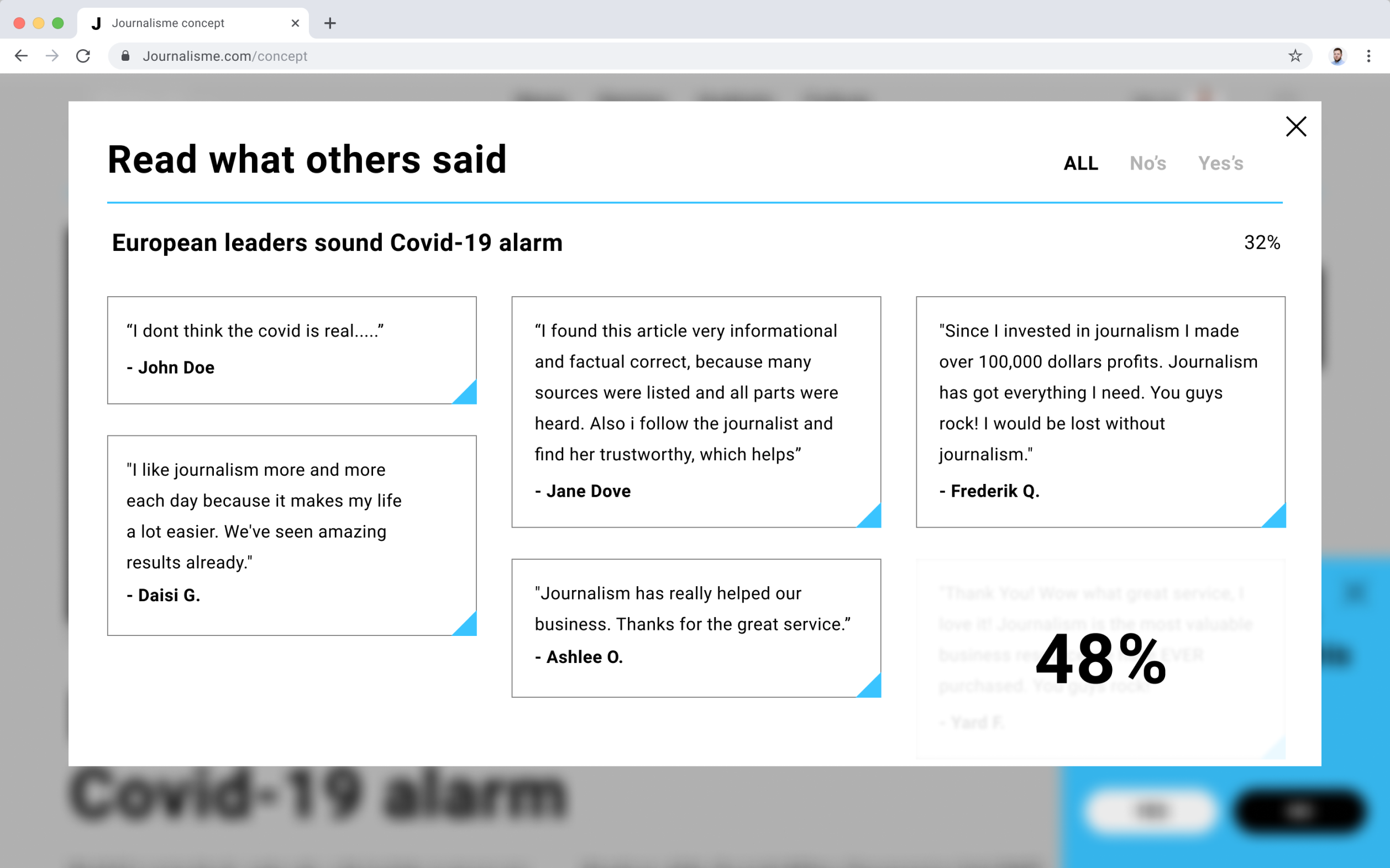
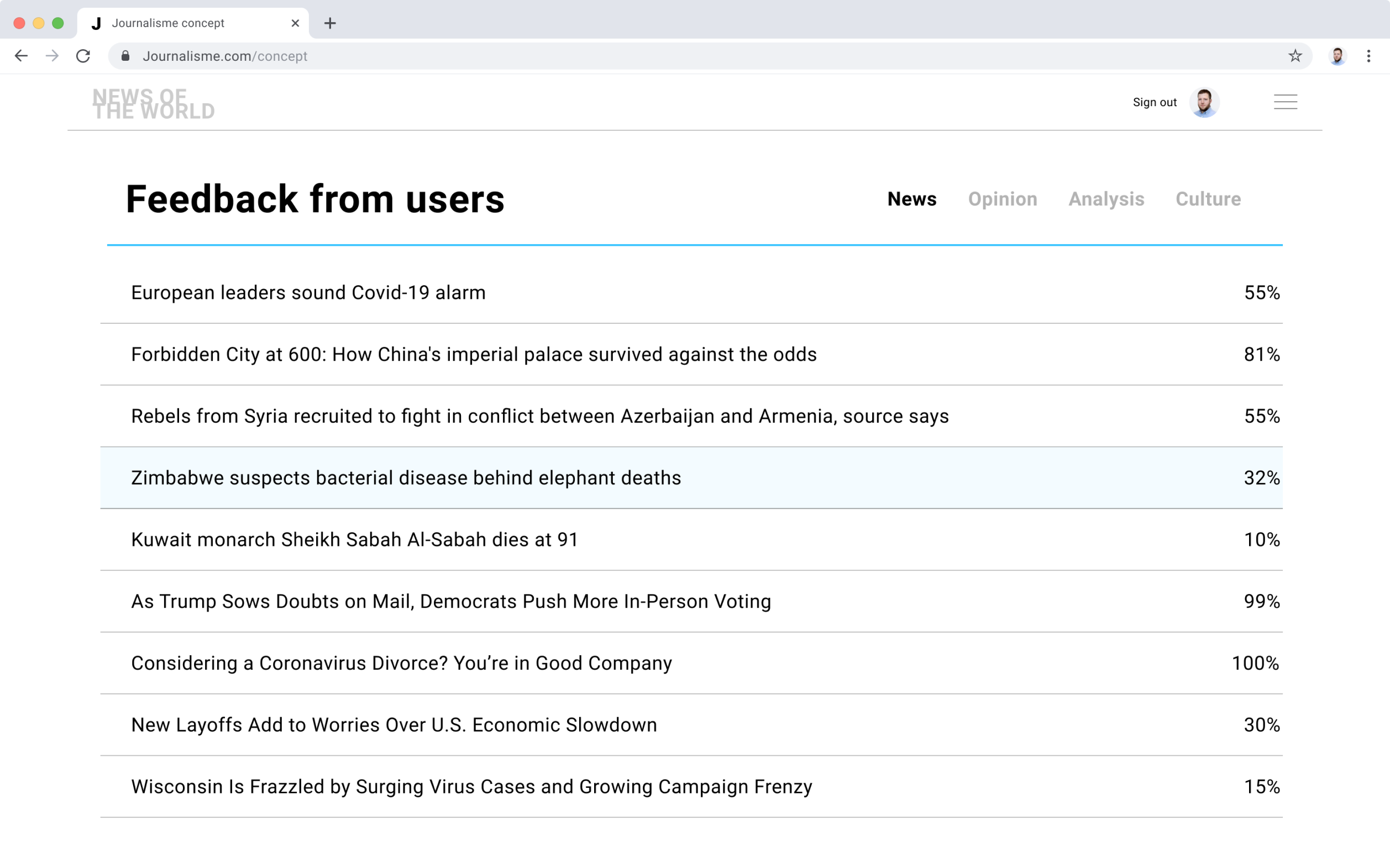
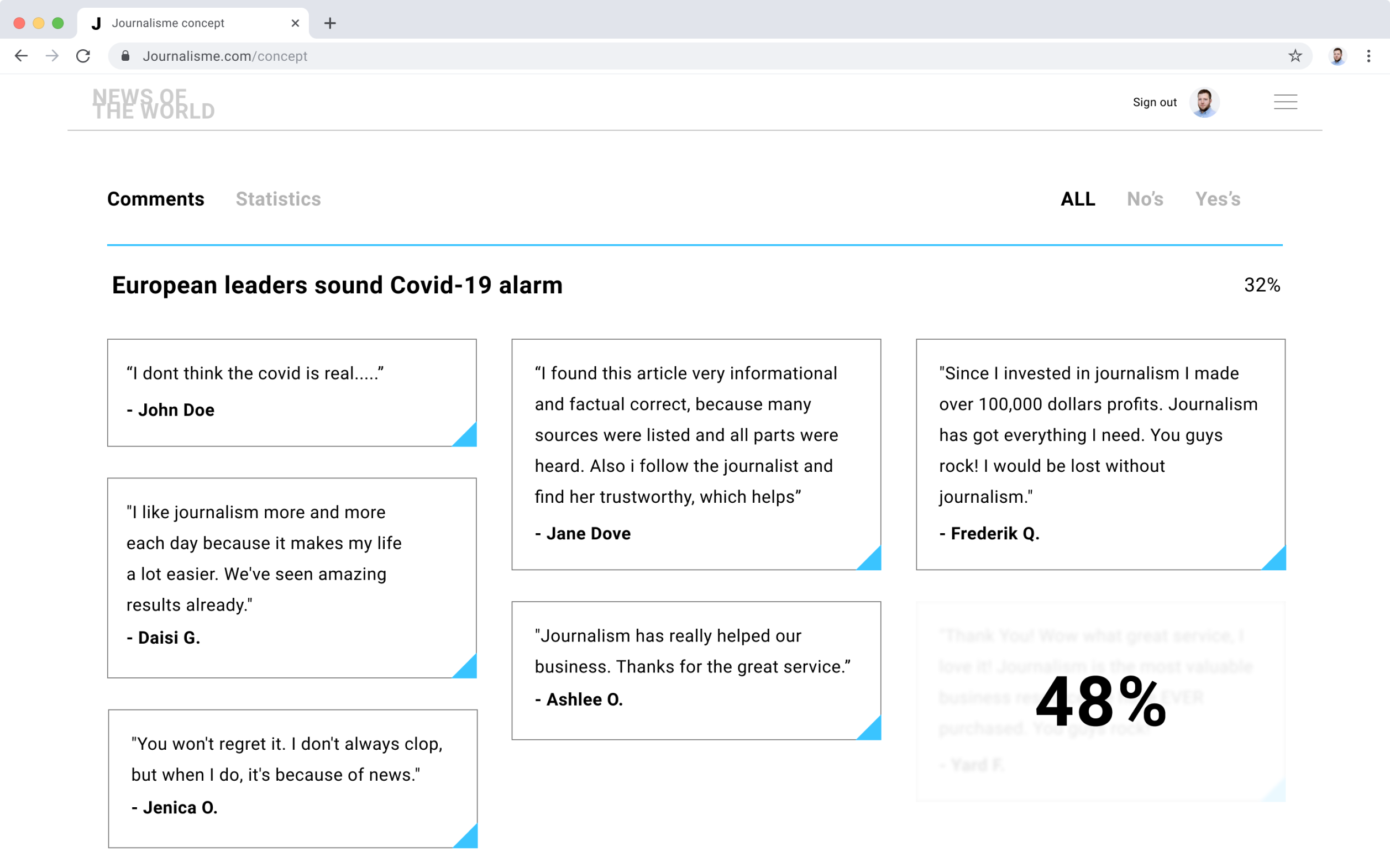
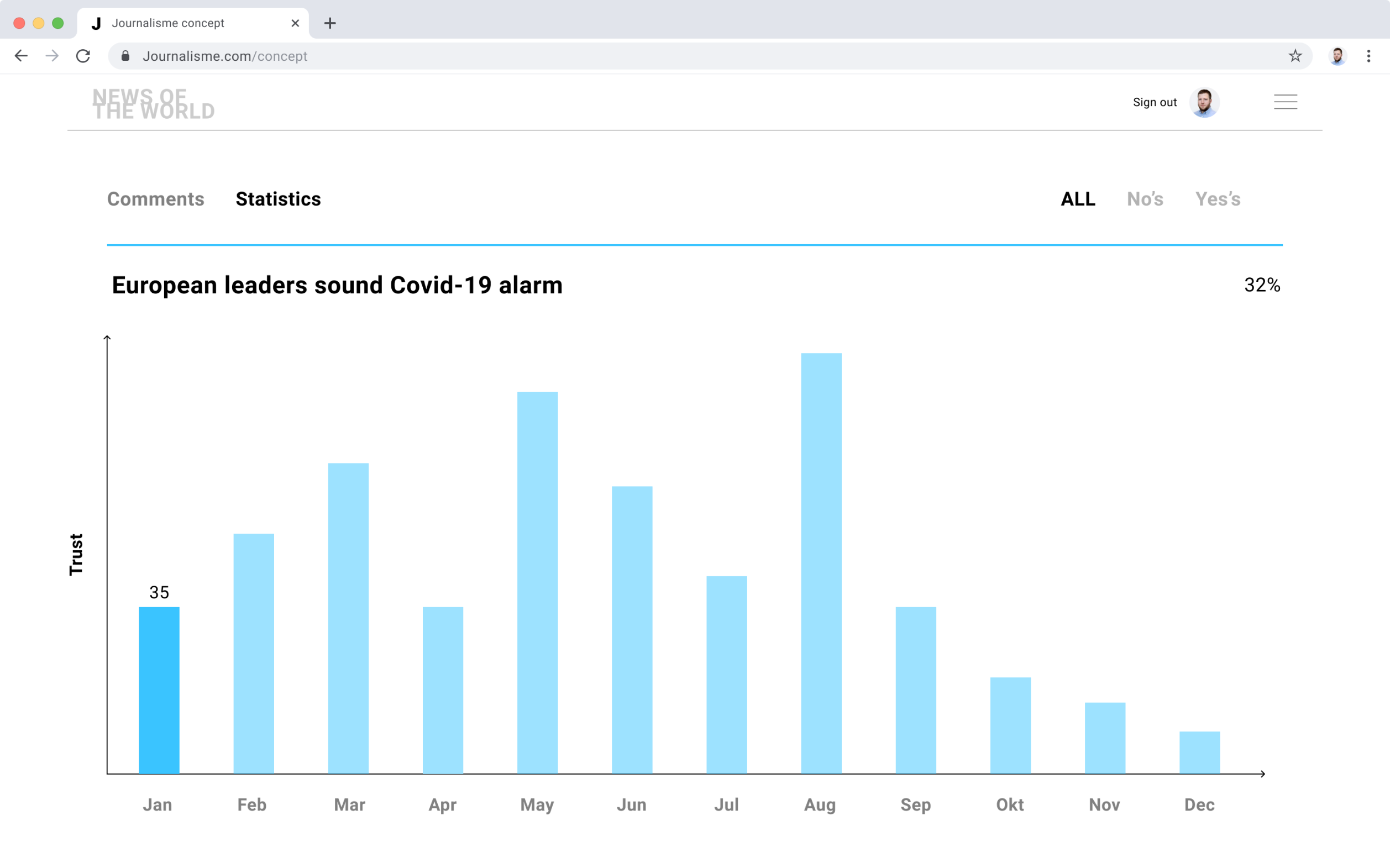
Wireframing is the next step after sketching moving in to something more concrete and approachable for stakeholders to see. Here i have created an outline of the concept.
This is the customer facing side of the concept.
This is the editor/journalist side of the concept.